















What this means for your supply chain
In 2026, the way road freight transport is taxed across Europe will change once again. More and more countries are increasing toll rates, expanding the number of toll roads, and linking costs directly to the number of kilometres driven, the weight of the vehicle, and its CO₂ emissions. The underlying idea is straightforward: governments want to continue funding infrastructure, make transport more sustainable, and place higher charges on more polluting vehicles.
For companies that rely on road transport, this has a very tangible impact: transport will become structurally more expensive and will require different logistics decisions than in the past.
The Netherlands: pay per kilometre from July 2026
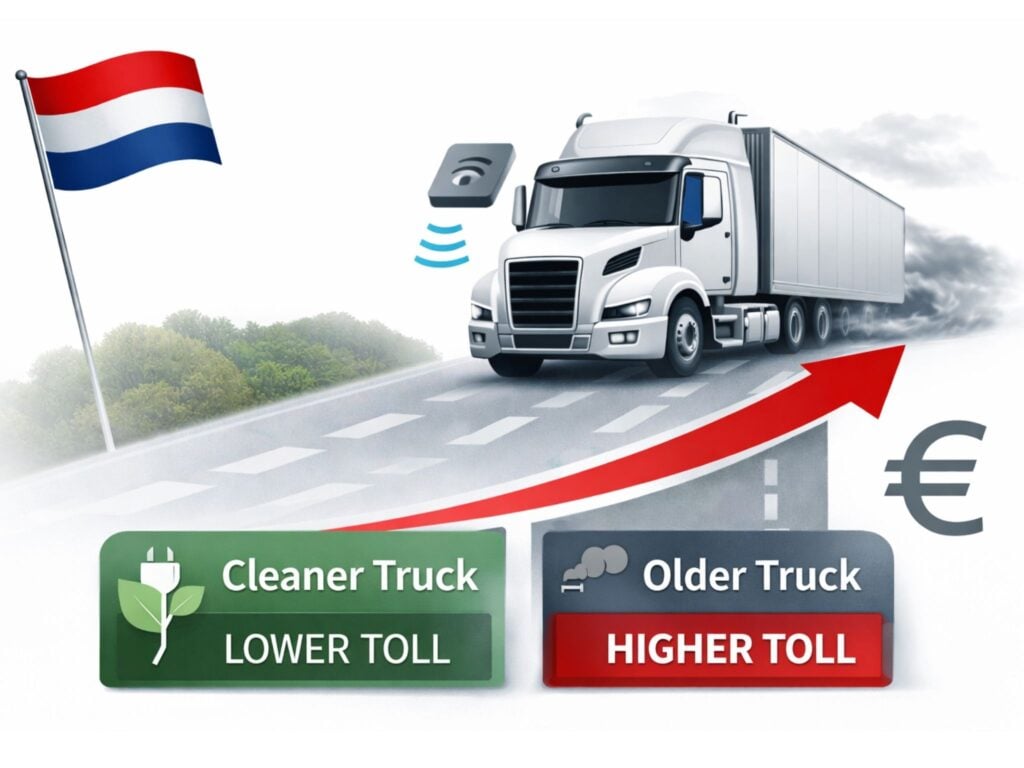
From 1 July 2026, the Netherlands will introduce a truck levy, replacing the Eurovignette. All trucks over 3.5 tonnes will be charged per kilometre driven, regardless of whether the vehicle has a Dutch or foreign licence plate.
The distance driven will be automatically registered via an on-board unit (OBU). The kilometre rate will depend on:
- the weight of the vehicle
- the CO₂ emission class
The cleaner and lighter the vehicle, the lower the rate per kilometre. Older and heavier trucks will pay more.
For companies that use the Netherlands as a logistics hub for the Benelux, Germany, or international routes, this means that:
- transport prices and margins will need to be recalculated
- every additional kilometre will have a direct and visible impact on costs
- route planning and route choices will become increasingly important
Poland: higher toll rates and more toll roads
In Poland, the changes are already underway. As of 1 January 2026, e-TOLL rates for heavy vehicles have been increased through indexation. In addition, a significant further increase of approximately 40–42% will follow from 1 February 2026, depending on vehicle weight and emission class.
Poland is also expanding its toll road network by approximately 645 kilometres of additional national roads and expressways. As a result, routes that were previously toll-free will now fall under the e-TOLL system.
For transport between Western Europe and Central or Eastern Europe, this has a direct impact on:
- per-kilometre transport costs
- route planning
- total transport budgets
For companies using Poland as a production, warehousing, or distribution location, toll costs are therefore no longer a secondary consideration, but a fixed and structural part of the overall cost base.
What does this mean for European supply chains?
The developments in the Netherlands and Poland are not isolated cases. They are part of a broader European shift towards:
- paying per kilometre driven
- higher costs for more polluting vehicles
- fully digital tolling and enforcement systems
This means that cost control is no longer achieved solely through negotiating transport rates, but increasingly through smart logistics decisions, such as:
- reducing kilometres driven through smarter route planning
- better combining and consolidating shipments (see our groupage solutions)
- storing goods closer to the end market
As a result, the location of your warehouse and the way you organise distribution are becoming increasingly important.
How Axell helps you stay in control of costs
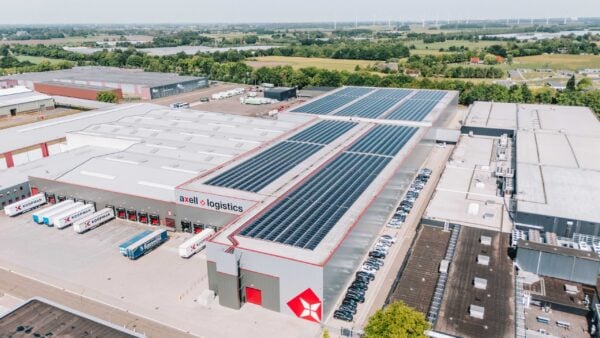
We see more and more companies reassessing their supply chains due to rising toll costs. With warehouses in both the Netherlands and Poland, we help our customers limit transport movements and keep costs predictable.
By intelligently combining warehousing, distribution, and international transport, we support you in:
- reducing unnecessary kilometres
- consolidating goods closer to your sales markets
- controlling logistics costs in a changing regulatory environment
Would you like to understand what these changes mean in practical terms for your logistics setup?
Get in touch with our specialists and discover how we can optimise your transport and distribution flows across Europe.
