















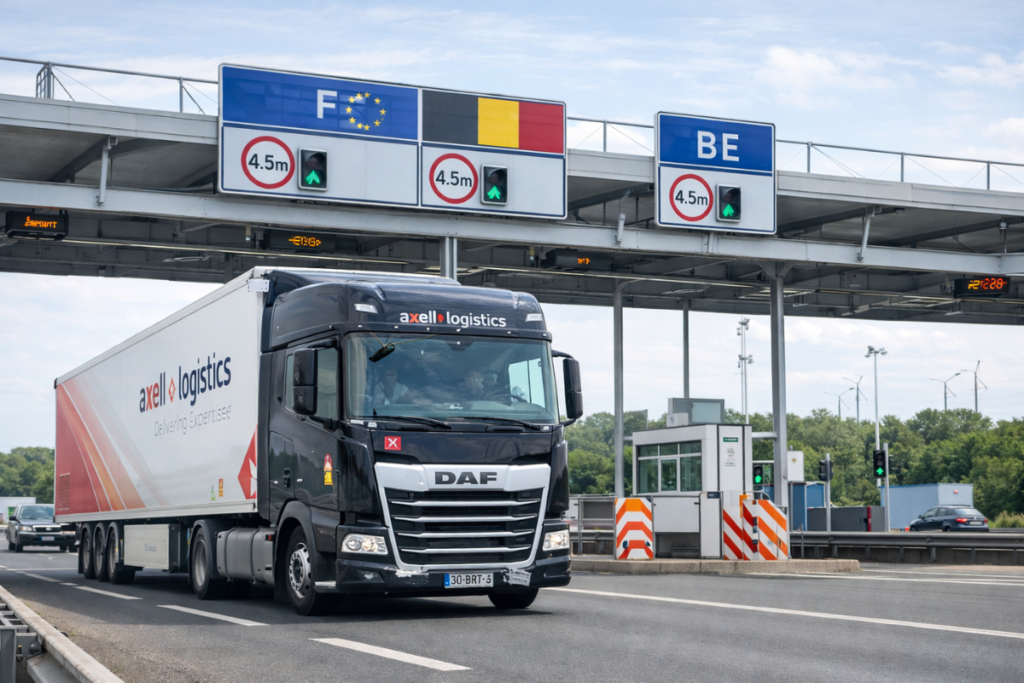
Export clearance is the customs process through which goods are officially released for export to a country outside the European Union. During this process, customs authorities verify whether all required documents are present and whether the goods comply with applicable laws and regulations. Only after approval may the goods leave the European Union.
For companies involved in international trade, export clearance is an essential part of the logistics process. Without proper export clearance, shipments may be delayed, incur additional costs, or even be held by customs authorities.
What does export clearance mean?
Export clearance, also known as customs export clearance, is the formal declaration of goods to customs before they are exported to a destination outside the European Union.
When goods leave the EU, the exporter or logistics service provider must inform customs about which goods are being shipped, their value, and the country to which they are being exported. After reviewing the declaration, customs grants permission for export. This is recorded in an export document that proves the goods have legally left the European Union.
Export clearance is therefore a mandatory customs process for export shipments to countries outside the EU.
When is export clearance required?
Export clearance is required when goods are exported from an EU country to a country outside the European Union. Examples include exports to the United Kingdom, Switzerland, Norway, the United States, Canada, or China.
For deliveries within the European Union, export clearance is generally not required because the internal market allows the free movement of goods. Since Brexit, for example, export clearance has once again become a standard part of goods flows between the Netherlands and the United Kingdom.
How does the export clearance process work?
The export clearance process begins with collecting all required information about the shipment. An export declaration is then submitted to customs. This includes information about the sender, recipient, nature of the goods, customs value, HS code, destination, and mode of transport.
After submission, customs reviews the declaration. In most cases, this process is entirely digital. If necessary, customs may request additional documents or conduct a physical inspection. Once the declaration has been approved, the exporter receives authorization to export the goods.
Which documents are required for export clearance?
Several documents are required for proper export clearance. The exact documents depend on the type of goods and the destination country.
In most cases, these include a commercial invoice stating the goods and their value, a packing list detailing the contents of the shipment, an export declaration for customs, and transport documents such as a CMR consignment note. Certain products may also require additional certificates or permits.
An error in any of these documents can result in delays, additional inspections, or unexpected costs.
What is the difference between export clearance and import clearance?
The terms export clearance and import clearance are often confused, but they refer to two different stages within international transportation.
Export clearance relates to the export side of a shipment. Goods are officially declared before leaving the European Union. Import clearance, on the other hand, takes place when goods enter a country or customs territory. During this process, customs determines whether import duties, VAT, or other charges must be paid.
In international trade outside the European Union, both processes often occur within the same goods flow. A shipment is first cleared for export in the exporting country and then cleared for import in the destination country.
What challenges can occur during export clearance?
Although modern customs systems automate many processes, issues can still arise during export clearance. Common causes include incorrect product classifications, missing documents, or errors in the export declaration.
In addition, changes in customs regulations can affect existing export processes. For companies that regularly trade internationally, it is therefore important to maintain up-to-date knowledge of customs regulations or work with a specialized logistics partner.
Proper export clearance prevents delays, unnecessary costs, and problems at border crossings.
Which companies is export clearance important for?
Export clearance is relevant to almost all companies that export goods outside the European Union. This includes manufacturers, wholesalers, e-commerce businesses, retailers, and organizations in the high-tech or industrial sectors.
As international trade continues to grow, the importance of efficient and error-free customs processing also increases. Companies that export regularly often benefit greatly from streamlined processes and expert support.
How can a logistics partner support this?
International goods flows require more than transportation alone. Documentation, customs formalities, and coordination between different parties also play an important role in a smooth export process.
A logistics partner can assist with preparing customs documentation, organizing transportation, and managing export shipments to destinations outside the European Union. For companies that ship internationally on a regular basis, a combination of international transportation and logistics support can reduce the risk of delays and ensure more efficient processing of export shipments.