















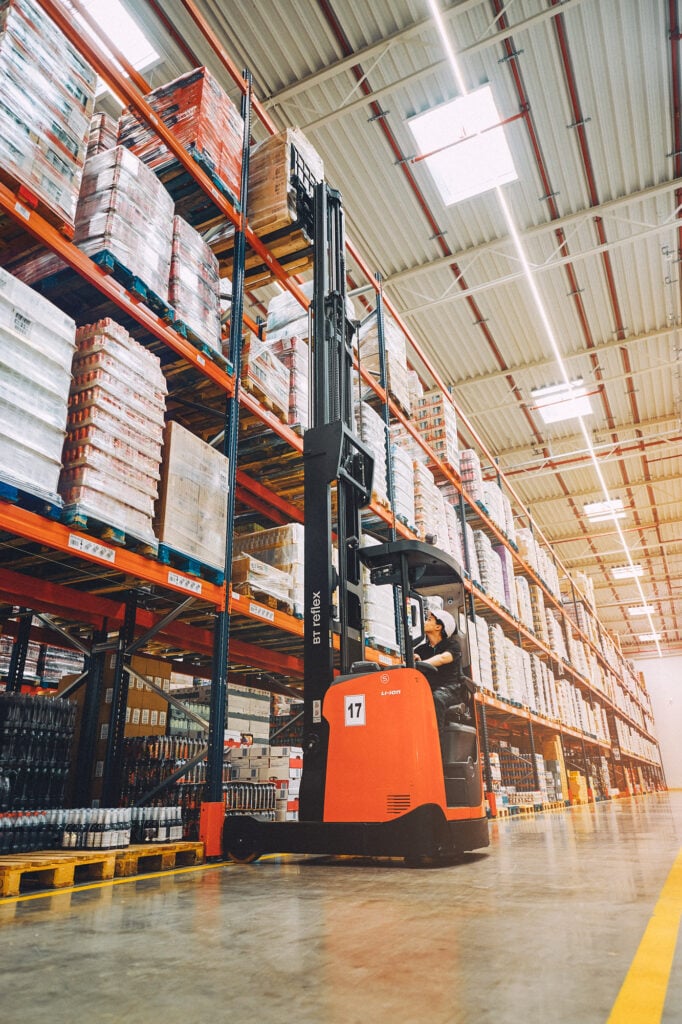
Lean logistics is a method within logistics that focuses on reducing waste and optimizing processes. The goal is to move goods through the supply chain as efficiently as possible, without unnecessary costs, waiting times, or inventory.
The principles of lean logistics originate from the Lean Management concept, which was originally developed within the Japanese automotive industry. Today, lean logistics is applied worldwide to make logistics processes more efficient, flexible, and customer-oriented.
What does lean logistics mean?
Lean logistics is about creating maximum value for the customer with as little waste as possible. This involves critically evaluating all activities within the logistics chain. Processes that do not add direct value are reduced or eliminated as much as possible.
Within logistics, waste can occur in various forms. Examples include excess inventory, unnecessary transportation movements, waiting times, incorrect order processing, or inefficient warehouse layouts.
The principle of lean logistics is simple: every step in the process should contribute to an efficient flow of goods and better customer service.
Why is lean logistics important?
Logistics processes are becoming increasingly complex. Companies face higher customer expectations, shorter delivery times, and growing pressure to control costs.
When processes are not optimally organized, inefficiencies often arise that lead to higher costs and lower productivity. Lean logistics helps organizations identify these bottlenecks and improve them structurally.
By reducing waste, companies can respond more quickly to changes in the market while simultaneously improving their operational performance. This not only leads to lower costs but also to higher delivery reliability and greater customer satisfaction.
The key principles of lean logistics
Lean logistics is based on several core principles aimed at continuous improvement.
Creating value for the customer
Within lean logistics, the customer is central. Activities that directly contribute to better service are considered valuable. Processes that do not add value are critically evaluated.
Eliminating waste
An important part of lean logistics is identifying waste. Within logistics processes, this may include excess inventory, unnecessary movement of goods, or duplicate administrative activities.
By reducing this waste, processes become more efficient and easier to manage.
Continuous improvement
Lean logistics is not a one-time project but an ongoing way of working. Organizations continuously analyze and improve processes to further optimize performance.
Small improvements can have a major impact on the efficiency of the entire supply chain over time.
Focus on flow
A smooth flow of goods forms the foundation of lean logistics. Products should move through the logistics chain without unnecessary delays. This reduces lead times and creates greater flexibility.
How is lean logistics applied?
Lean logistics can be applied across virtually all parts of the supply chain.
In warehouses, for example, attention is given to the most efficient walking routes, storage locations, and order-picking processes. By positioning products logically and optimizing warehouse operations, employees can work faster and errors can be reduced.
Within transportation, lean logistics focuses on efficient route planning and minimizing empty miles. Goods flows are also aligned more closely with actual demand, preventing unnecessary transportation movements.
Inventory management also plays an important role. Lean organizations strive for an optimal inventory balance: sufficient stock to serve customers effectively, without tying up unnecessary capital in excess products.
What does lean logistics mean in practice?
Suppose an organization notices that products regularly remain in the warehouse for too long before being shipped. This results in additional storage costs and lower inventory turnover.
Using a lean approach, the company investigates where the delay occurs. It may turn out that order-picking processes are inefficiently organized or that goods are stored in illogical locations.
By adjusting these processes, products can be processed more quickly and lead times can be reduced. The result is a more efficient warehouse, lower costs, and better service for customers.
Benefits of lean logistics
Lean logistics offers various benefits for organizations looking to improve their logistics processes.
One important advantage is the reduction of operational costs. Less waste means fewer unnecessary activities, more efficient use of resources, and better utilization of personnel.
In addition, lean logistics often leads to higher delivery reliability. Processes become more predictable, and errors are identified and resolved more quickly.
Inventory management also benefits from a lean approach. By aligning inventory more closely with actual demand, organizations gain better visibility while avoiding unnecessary storage space.
Organizations that successfully implement lean logistics often create greater flexibility within their supply chains and can respond more quickly to changing market conditions.
Considerations when implementing lean logistics
Although lean logistics offers many benefits, implementation requires a careful approach.
Processes must be analyzed thoroughly, and employees should be involved in improvement initiatives. In addition, reliable data is essential for measuring performance and identifying bottlenecks.
It is also important not to focus exclusively on cost reduction. The ultimate goal remains creating value for the customer and improving overall logistics performance.
How does a logistics partner support this?
Applying lean principles requires insight, structure, and well-organized logistics processes. A logistics partner can provide support by analyzing processes and organizing goods flows more efficiently.
Within warehousing, for example, warehouse processes can be optimized to reduce order lead times and improve inventory accuracy.
Within distribution, lean principles can contribute to more efficient transportation flows, better route planning, and higher delivery reliability.
For organizations that want to integrate multiple logistics activities within one solution, contract logistics can help align storage, transportation, and logistics coordination more effectively.