














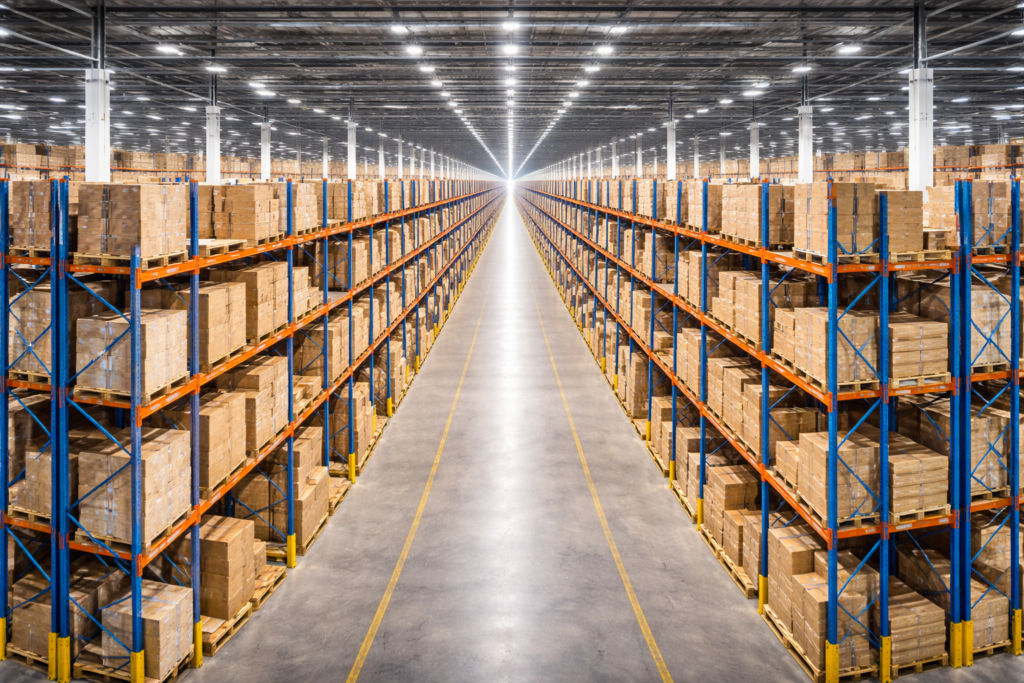
A warehouse is a location where goods are temporarily stored, managed, and processed before they are further distributed or used. Warehouses form an important link within the supply chain and ensure that products are available at the right time, in the right quantity, and at the right location.
Although storage is an important function, a modern warehouse performs many more tasks today. In addition to inventory management, activities such as order processing, order picking, packaging, and distribution preparation often take place. As a result, the warehouse plays a crucial role in the efficiency of logistics processes and customer satisfaction.
What does a warehouse mean?
A warehouse is a facility where goods are received, stored, and processed before reaching their next destination. This may be a store, distribution center, production environment, or end customer.
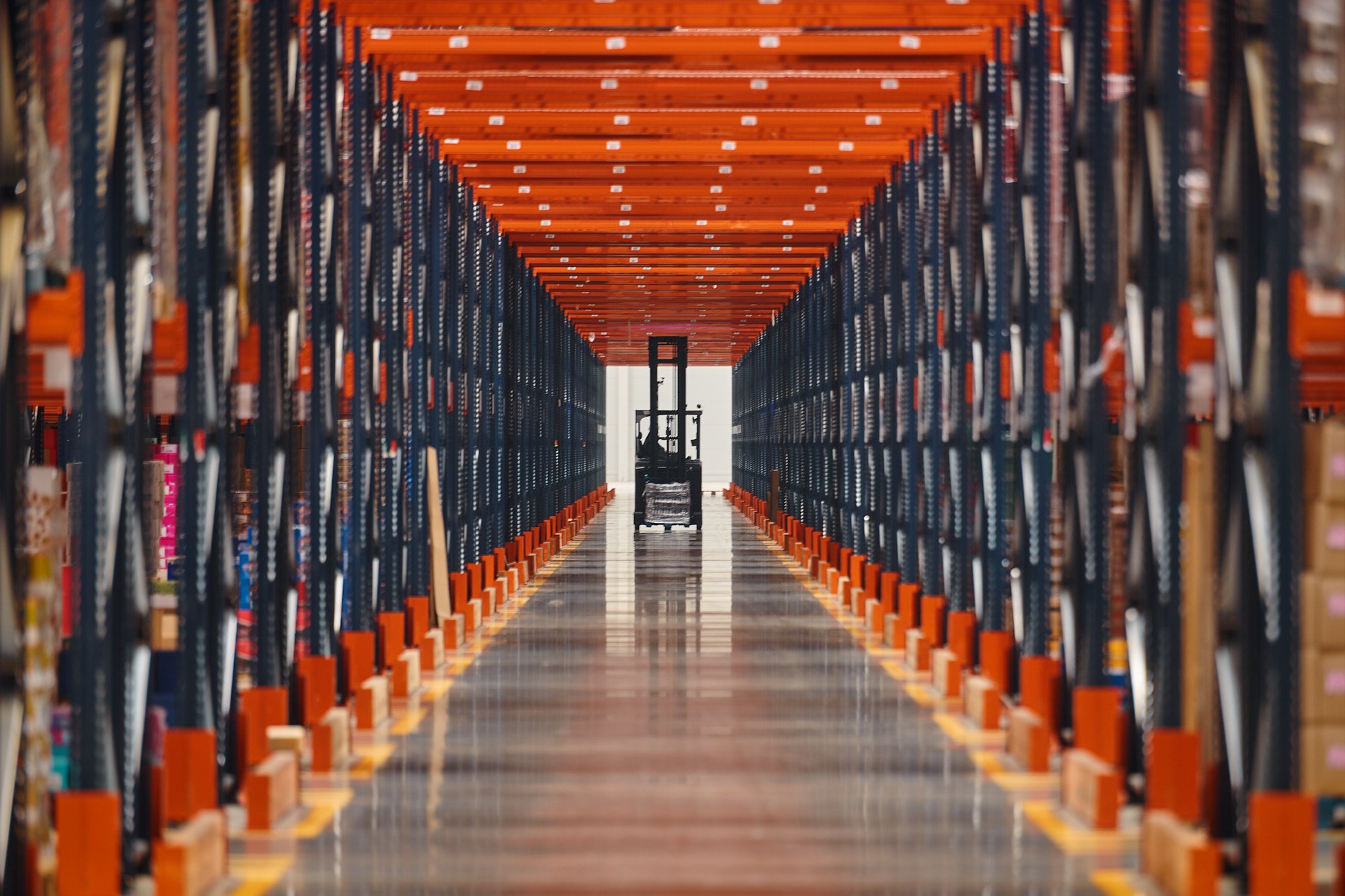
Within a warehouse, products are organized and stored so that they are quickly available when an order is received. This is not only about storage capacity but also about efficient inventory management and an optimal flow of goods.
In modern supply chains, a warehouse is increasingly viewed as a strategic part of the logistics operation rather than solely a storage location.
What functions does a warehouse have?
A warehouse supports various logistics processes that contribute to an efficient flow of goods.
The first function is the receipt of goods. Products are delivered by suppliers or manufacturers and inspected before they are stored.
The goods are then stored in designated locations within the warehouse. It is important that products can be easily located and processed efficiently.
Inventory management also plays an important role. Organizations must continuously have insight into available inventory in order to prevent shortages and surpluses.
Order processing is also one of the core activities of many warehouses. As soon as an order is received, products are picked, checked, packed, and prepared for shipment.
Finally, a warehouse supports the distribution of goods to customers, stores, or other locations within the supply chain.
How does a warehouse work?
The operation of a warehouse consists of several steps that together ensure a controlled flow of goods.
Receiving goods
When products arrive, they are registered and checked for quantities, quality, and any damage. The goods are then entered into the warehouse management system.
Inventory storage
After receipt, products are assigned a storage location. Modern warehouses use Warehouse Management Systems (WMS) that provide real-time visibility into inventory levels and storage locations.
An efficient storage structure ensures that products can be quickly retrieved when needed.
Order picking
When an order is placed, employees or automated systems receive instructions to collect the required products.
This process, also known as order picking, forms an important part of daily warehouse operations.
Packaging and shipping
After products have been collected, they are checked, packed, and prepared for transportation. The goods then leave the warehouse for their final destination.
What types of warehouses are there?
Not every warehouse serves the same purpose. Depending on logistics requirements, different types of warehouses can be used.
Storage warehouse
A storage warehouse is primarily focused on storing goods. Products remain there until they are needed for production, sales, or distribution.
Distribution center
A distribution center focuses on the rapid processing of goods. Products often remain there only briefly before being forwarded to customers or stores.
Fulfillment center
Within a fulfillment center, the focus is on order processing for e-commerce and other sales channels. In addition to storage, orders are also picked, packed, and shipped from these facilities.
Production warehouse
Production warehouses support manufacturing processes by keeping raw materials, components, and semi-finished products available for production operations.
The role of technology in modern warehouses
Technology plays an increasingly important role in warehouse management. Organizations use Warehouse Management Systems to manage inventory levels, storage locations, and order flows in real time.
In addition, processes are increasingly supported by scanners, mobile terminals, and automation solutions. This helps reduce errors and increase productivity.
Some warehouses also use advanced technologies such as automated transport systems, pick-to-light solutions, and robotics.
These developments enable warehouses to operate faster, more accurately, and more efficiently.
What does a warehouse mean in practice?
Suppose a retailer sells thousands of products through physical stores and an online shop. The goods are received at a central warehouse where they are stored and registered.
When a store requires inventory or a consumer places an order, the products are picked and shipped from the warehouse.
By combining inventory management, order processing, and distribution in one location, an efficient logistics operation is created that supports delivery reliability.
Why is a warehouse important within the supply chain?
A warehouse forms an important link between suppliers, manufacturers, and customers. Without effective storage and processing operations, goods flows can stagnate and delays can occur within the supply chain.
A well-organized warehouse provides:
- Greater visibility into inventory.
- Faster order processing.
- Better delivery reliability.
- More efficient use of storage space.
- Lower logistics costs.
In addition, a warehouse helps organizations respond flexibly to fluctuations in supply and demand.
An efficient warehouse therefore contributes directly to higher customer satisfaction and a better-performing supply chain.
How does a logistics partner support this?
As organizations grow, the demands on storage, inventory management, and order processing also increase. A logistics partner can provide support by professionally organizing warehouse operations and using advanced systems.
Professional warehousing ensures that goods are stored and managed efficiently. For organizations that process large numbers of orders every day, fulfillment services can contribute to fast and accurate order handling.
When storage, order processing, transportation, and logistics coordination need to be combined within one integrated solution, contract logistics provides additional opportunities to streamline processes and create greater control throughout the supply chain.