













ustainability in logistics is about reducing the impact of logistics activities on people, the environment, and society. It is not only about reducing CO₂ emissions, but also about using transport resources, warehouses, energy, and raw materials more efficiently. For an increasing number of organizations, sustainable logistics has become an important part of a future-proof supply chain.
Customers, governments, and supply chain partners are placing ever-higher demands on sustainability. At the same time, many companies are discovering that sustainability initiatives not only benefit the environment but can also contribute to lower costs, more efficient processes, and a stronger market position.
What does sustainability in logistics mean?
Sustainability in logistics encompasses all measures aimed at reducing the environmental impact of logistics processes. This can relate to transportation, storage, distribution, packaging, and inventory management.
Where logistics was traditionally assessed mainly on speed and cost, factors such as emissions, energy consumption, and resource usage now also play an important role.
Examples of sustainable logistics measures include:
- Optimizing transport routes
- Increasing vehicle load capacity utilization
- Reducing empty miles
- Using alternative fuels
- Making warehouses more sustainable
- Reducing packaging materials
The goal is to make logistics processes more efficient without compromising reliability or service levels.
Why is sustainable logistics becoming increasingly important?
The logistics sector plays a key role within international supply chains. At the same time, transportation is responsible for a significant share of global greenhouse gas emissions.
In addition, companies are increasingly facing:
- Sustainability objectives set by customers
- ESG and CO₂ emissions reporting requirements
- Rising energy costs
- National and European regulations
- Expectations from investors and stakeholders
As a result, sustainability is increasingly becoming a strategic topic in logistics decision-making.
For many organizations, sustainability is no longer a choice but an important component of risk management and competitive strength.
How do companies make their logistics processes more sustainable?
Sustainable logistics often consists of a combination of different measures.
Smarter transport planning
By planning transport flows more effectively, companies can reduce the number of kilometers traveled. This leads to lower fuel consumption and reduced emissions.
More efficient inventory management
A well-organized warehouse helps streamline goods flows. Modern warehousing systems provide greater insight into inventory levels and logistics processes.
Sustainable warehouses
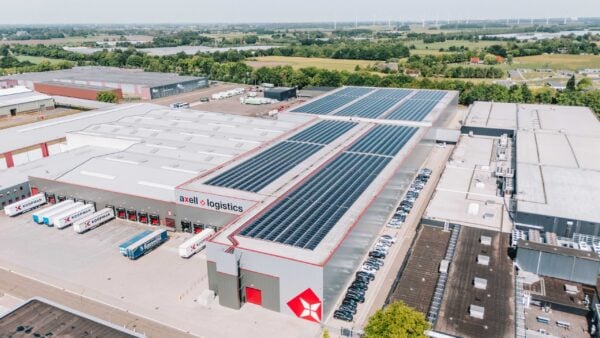
Many logistics companies invest in energy-efficient buildings, LED lighting, solar panels, and more efficient heating and cooling systems.
Digitalization and real-time visibility
Technology makes it possible to monitor goods flows more effectively and continuously optimize processes. This helps prevent unnecessary transport movements.
Collaboration within the supply chain
By working more closely with suppliers, carriers, and customers, companies can organize goods flows more efficiently and make better use of available capacity.
Benefits and points of attention
Sustainability in logistics offers various advantages but also requires a well-thought-out approach.
Benefits
Lower operating costs: More efficient processes often result in reduced fuel consumption and lower energy costs.
Lower emissions: Sustainability measures contribute to a reduced CO₂ footprint.
Stronger competitive position: More and more customers require sustainability from their logistics partners.
Future readiness: Organizations are better prepared for future regulations and market requirements.
Points of attention
Investments: Some sustainability measures require an initial investment.
Process changes: Successful sustainability initiatives often require adjustments to working methods and systems.
Measurability: Organizations need reliable data to gain insight into results.
Supply chain collaboration: Many sustainability objectives can only be achieved through cooperation across the supply chain.
How does a logistics partner support this?
A logistics partner can help organizations make their supply chain more sustainable by designing processes more intelligently and utilizing logistics capacity more efficiently.
Services such as distribution and Third Party Logistics (3PL) can contribute to better utilization of transport resources, more efficient goods flows, and greater insight into logistics performance.
Ultimately, sustainability in logistics is not only about environmental benefits. It is also about creating efficient, scalable, and future-proof processes that help organizations remain successful in a changing market.