














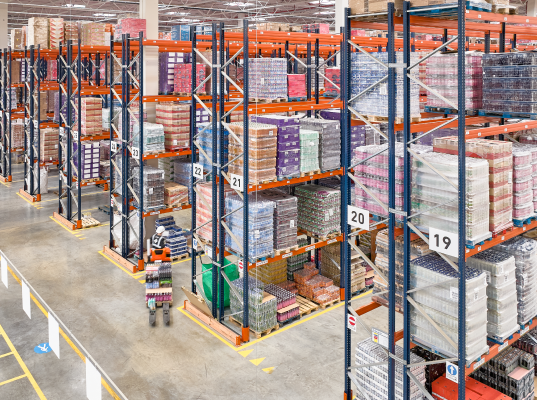
A warehouse, also known as a storage facility or distribution center, is a location where goods are stored, managed, and processed before being distributed to customers, stores, or other destinations. Warehouses form an important part of the supply chain and ensure that products are available at the right time.
For many companies, a warehouse is much more than just a storage space. Modern warehouses play a central role in inventory management, order processing, distribution, and logistics optimization.
What does a warehouse mean?
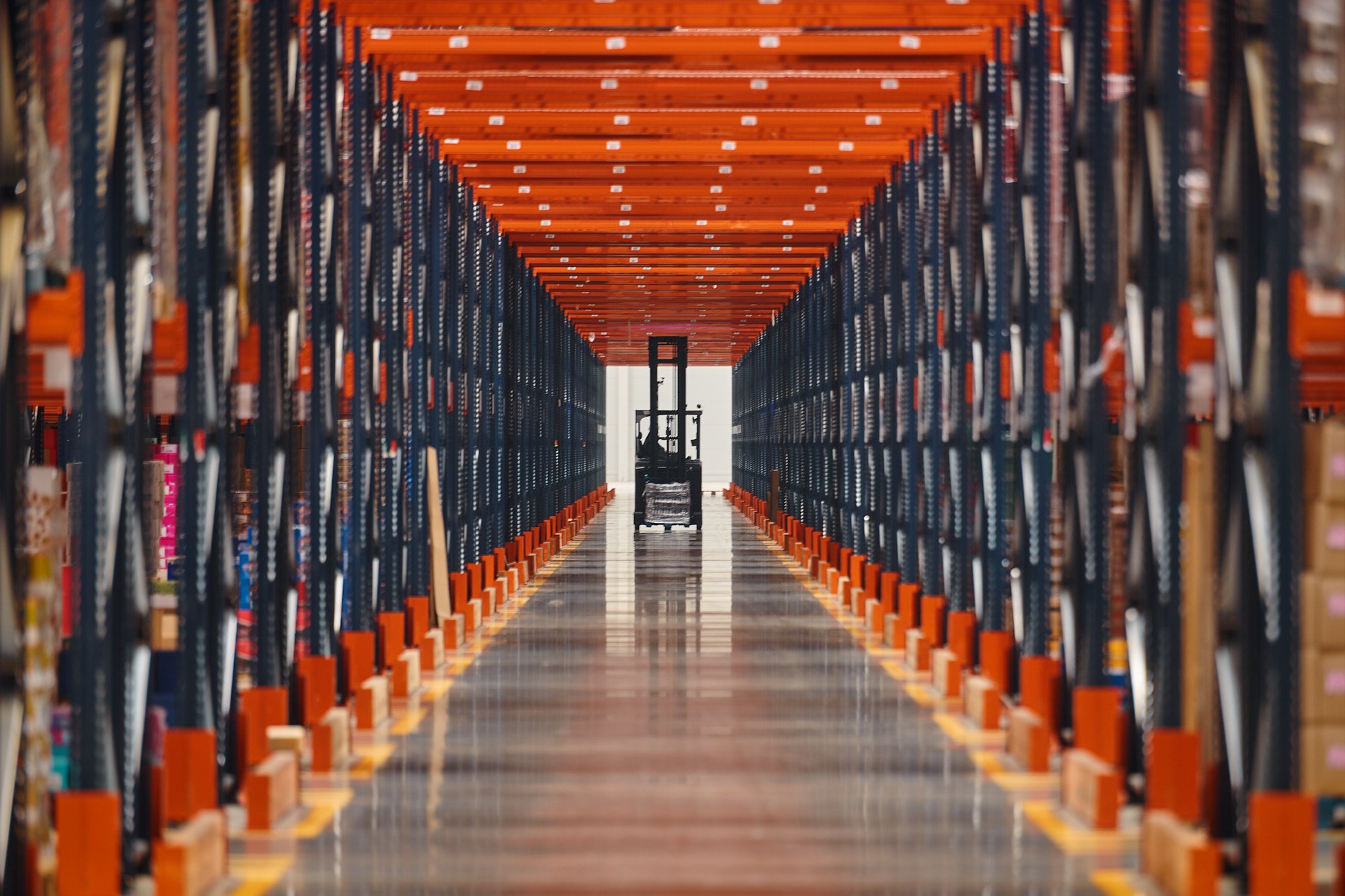
A warehouse is a specially designed facility where goods are stored temporarily or for longer periods. In addition to storage, other logistics activities often take place here, such as receiving goods, inventory management, order picking, packing, and shipping.
The purpose of a warehouse is to organize goods flows efficiently and ensure that products are available when customers need them.
Modern warehouses use advanced systems such as Warehouse Management Systems (WMS), which allow inventory to be monitored and managed in real time.
A warehouse provides control, visibility, and continuity within the supply chain.
What functions does a warehouse perform?
A warehouse fulfills several logistics functions. Its primary task is, of course, storing goods, but the role of a modern warehouse goes far beyond that.
Goods are received, inspected, and registered as soon as they arrive. They are then stored in a suitable location within the warehouse. Once a customer places an order, the products are picked, packed, and prepared for shipment.
In addition, a warehouse may perform supplementary activities such as quality inspections, labeling, repackaging, or product assembly. These activities are often carried out as part of logistics services.
How does a warehouse work?
The logistics process within a warehouse consists of several closely connected steps.
When goods arrive, they are first received and inspected. The products are then registered in the inventory management system and stored in a specific location.
Once an order is received, the warehouse receives an instruction to collect the relevant products. This process is called order picking. The goods are then packed and prepared for shipment.
Finally, the orders are handed over to a carrier or distribution network for delivery to the final destination.
By using automation and real-time inventory management, these processes can be carried out quickly and accurately.
What types of warehouses are there?
Not every warehouse has the same function. Depending on the goods flow and logistics requirements, different types of warehouses can be used.
Distribution center
A distribution center mainly focuses on processing and forwarding goods quickly. Products are often stored here for a relatively short period before being distributed further.
Fulfillment warehouse
A fulfillment warehouse processes online orders for webshops and e-commerce companies. In addition to storage, order picking, packing, and returns processing are also carried out here.
Multi-user warehouse
In a multi-user warehouse, multiple companies use the same storage location. This allows organizations to benefit from economies of scale and flexible storage capacity.
Dedicated warehouse
In a dedicated warehouse, a specific area or location is fully set up for one customer. This offers maximum control and customization.
Why is a warehouse important?
A warehouse plays an important role in ensuring delivery reliability and customer satisfaction. Without sufficient storage capacity and effective inventory management, it becomes difficult to make products available on time.
A warehouse also helps companies absorb fluctuations in demand. During peak periods, additional inventory can be stored, while during quieter periods available capacity can be used more efficiently.
In addition, a warehouse provides greater visibility into inventory levels, order flows, and goods movements. This enables companies to respond more quickly to changes in the market.
A well-organized warehouse contributes to lower costs, better service, and a more efficient supply chain.
Which companies use warehouses?
Warehouses are used by organizations across a wide range of industries. Examples include retailers, e-commerce companies, wholesalers, manufacturers, and logistics service providers.
Within the retail sector, warehouses play an important role in supplying stores and webshops. Warehouses also form the foundation for fast order processing and delivery within e-commerce.
In addition, sectors such as healthcare, food products, and high-tech use warehouses to manage inventory efficiently and support goods flows.
What are the benefits of professional warehousing?
Professional warehousing gives companies access to storage space, logistics expertise, and modern technology without requiring them to invest in warehouses or systems themselves.
Real-time inventory management provides greater visibility into available stock and goods flows. In addition, companies can scale operations flexibly when volumes increase or seasonal peaks occur.
Professional warehousing also often improves operational efficiency because processes are supported by specialized employees and advanced logistics systems.
How can a logistics partner support this?
A logistics partner supports companies by professionally organizing storage, inventory management, and order processing. This creates greater control over goods flows and allows logistics processes to be organized more efficiently.
With specialized warehousing solutions, organizations gain access to modern storage facilities, real-time inventory management, and scalable capacity. In combination with contract logistics, storage, distribution, and fulfillment can be integrated into one logistics solution.
For companies looking to grow without investing in additional warehouse space themselves, a professional warehouse can make a significant contribution to an efficient and future-proof supply chain.