















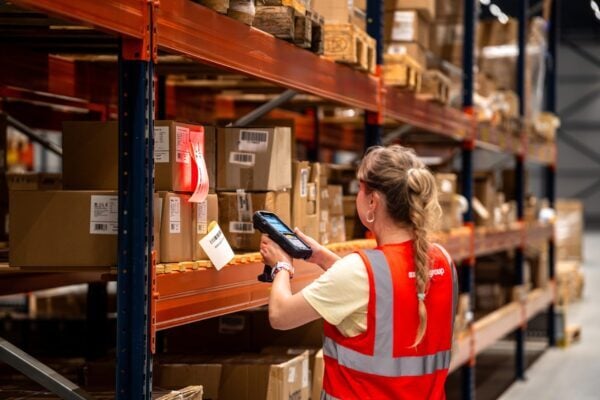
More and more companies are outsourcing their logistics processes to operate more efficiently and focus entirely on their core activities. In doing so, the terms 3PL (Third Party Logistics) and 4PL (Fourth Party Logistics) are frequently used. Although both forms of logistics services are aimed at optimising the supply chain, they differ significantly in terms of responsibility, control and collaboration.
The main difference is that a 3PL provider performs logistics activities, while a 4PL provider coordinates and manages the entire supply chain, often working with multiple logistics service providers at the same time.
What is 3PL?
Third Party Logistics (3PL) means that a company outsources logistics activities to a specialised logistics service provider. This may include warehousing, order fulfilment, inventory management, transportation and distribution.
The 3PL provider has the necessary warehouses, transportation resources, systems and personnel to carry out these processes efficiently. As a result, organisations do not have to invest in their own warehouses, logistics software or transport capacity.
Many companies choose 3PL when they want to professionalise their logistics operations, control costs and gain greater flexibility during growth or seasonal peaks.
More information about this service can be found on the Third Party Logistics (3PL) page.
What is 4PL?
Fourth Party Logistics (4PL) goes one step further. A 4PL provider does not necessarily perform all logistics activities itself but instead takes responsibility for managing the entire supply chain.
The 4PL provider coordinates multiple logistics service providers, carriers, warehouses and suppliers. The objective is to organise the complete logistics chain as efficiently as possible while continuously optimising its performance.
A 4PL organisation acts as the central point of contact for all logistics activities. It analyses performance, monitors KPIs, optimises processes and ensures that all parties involved work together effectively.
For large international organisations with complex supply chains, a 4PL model can provide greater visibility, lower costs and improved strategic decision-making.
What are the main differences between 3PL and 4PL?
Although both solutions are designed to improve logistics processes, they mainly differ in the level of responsibility.
| 3PL | 4PL |
|---|---|
| Performs logistics activities | Manages the entire supply chain |
| Operates its own warehouses and transportation | Coordinates multiple logistics partners |
| Operational focus | Strategic and operational focus |
| Responsible for execution | Responsible for management and optimisation |
| Direct contact with the customer | Central point of contact for the entire logistics chain |
A 3PL provider is therefore responsible for executing logistics processes, while a 4PL provider manages the entire logistics organisation and continuously seeks improvements throughout the supply chain.
When should you choose 3PL?
For many organisations, 3PL is the most logical choice. When warehousing, inventory management, order fulfilment and distribution need to be organised professionally, a 3PL provider offers immediate access to logistics expertise, modern systems and scalable capacity.
Companies often choose 3PL when they want to outsource their logistics operations without remaining responsible for warehouses, personnel or transport planning. They also benefit from real-time visibility into inventory and goods flows, allowing processes to operate more efficiently.
For growing organisations, a 3PL solution also provides the flexibility needed to scale operations quickly as demand increases.
When is 4PL the right choice?
A 4PL solution is particularly suitable for organisations with highly complex international supply chains. This includes companies working with multiple logistics service providers, several warehouses and international transportation networks.
In this situation, one central coordinating partner can ensure better alignment across every link in the supply chain. This increases transparency, improves coordination between processes and enables continuous optimisation of logistics performance.
For small and medium-sized organisations, this type of service is often less necessary because their logistics operations are generally less complex.
How does a logistics partner support this?
For many businesses, a professional 3PL provider offers the right balance between operational support and flexibility. By bringing warehousing, inventory management, order fulfilment and distribution together under one roof, companies benefit from an efficient logistics chain with a single point of contact for day-to-day operations.
Axell Logistics supports organisations with integrated logistics solutions in the areas of warehousing, contract logistics and Third Party Logistics (3PL). Thanks to real-time WMS and TMS systems, customers have continuous visibility into inventory, orders and transportation. This allows logistics processes to be organised efficiently while giving businesses more time to focus on growth.