













The costs of fulfilment differ per webshop, order volume, and logistics requirements. Fulfilment covers the entire process of storage, order processing, shipping, and returns handling of products. Companies are increasingly choosing fulfilment to organise logistics processes in a scalable and more efficient way.
Within ecommerce and retail, fulfilment costs play an important role in margins, customer satisfaction, and growth opportunities. That is why it is important to look not only at shipping costs, but at the entire logistics chain.
What does fulfilment mean?
Fulfilment includes all logistics processes from the moment a customer places an order until delivery and possible return handling.
A fulfilment partner often takes care of:
- product storage
- inventory management
- order picking
- packaging
- shipping
- reverse logistics
For many ecommerce companies, outsourcing fulfilment becomes interesting once order volumes grow or internal logistics processes require too much time and capacity.
With professional fulfilment services, companies gain more scalability, real-time insight, and control over logistics processes.
Which costs are part of fulfilment?
Fulfilment rates usually consist of multiple components. The final costs depend on volumes, product types, desired service levels, and logistics complexity.
Storage costs
Storage costs are calculated based on the use of warehouse capacity. Factors such as the following play a role:
- number of pallets
- warehouse locations
- inventory turnover rate
- required storage space
Companies with seasonal peaks or strongly fluctuating inventory often require flexible warehousing solutions.
Order picking costs
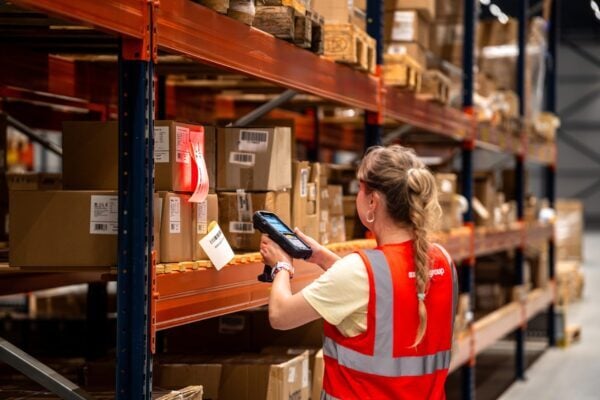
With every order, products are collected, checked, and packed. This is also called pick & pack.
The costs often depend on:
- number of orders
- number of order lines
- type of products
- packaging requirements
Complex orders or assembled products generally require more processing time.
Shipping costs
Transport costs form an important part of fulfilment rates.
Factors include:
- parcel size
- weight
- destination
- delivery time
- carrier
- international shipments
For ecommerce companies, shipping costs can fluctuate significantly during peak periods.
Return costs
Within ecommerce, return flows form an important part of fulfilment.
Return costs may consist of:
- return processing
- quality checks
- repackaging
- inventory updates
- return transport
Especially fashion and retail often have relatively high return volumes.
Value Added Services
Some fulfilment processes require additional logistics activities.
Examples include:
- labelling
- bundling
- kitting
- special packaging
- adding inserts
- quality checks
These activities often fall under Value Added Services (VAS).
Which factors influence fulfilment rates?
The costs of fulfilment differ greatly per organisation. Therefore, there is usually no fixed fulfilment price.
Important factors include:
Order volume
Larger volumes often result in more efficient processes and lower costs per order.
Product characteristics
Dimensions, weight, and fragility affect storage and transport costs.
Sales channels
Webshops working with marketplaces, retail, and omnichannel fulfilment often have more complex logistics processes.
Peak periods
During Black Friday, holidays, or promotional campaigns, volumes often increase significantly. Fulfilment must be scalable enough to handle this.
Return flows
Sectors with high return percentages require more operational processing.
IT integrations
API integrations with webshops, marketplaces, and ERP systems ensure real-time communication between systems.
For many ecommerce companies, reliable integrations are essential for efficient order processing.
What does fulfilment cost in practice?
In practice, fulfilment partners usually work with a combination of fixed and variable costs.
Common cost structures include:
- storage costs per pallet, location, or square metre
- pick & pack rates per order
- shipping costs per parcel or shipment
- return costs
- additional service costs
Small webshops often have different cost structures than large ecommerce companies processing thousands of orders per month.
In addition, automation, real-time inventory management, and scalability are playing an increasingly important role in total fulfilment costs.
That is why companies look not only at the lowest price, but especially at:
- delivery reliability
- error reduction
- flexibility
- customer satisfaction
- insight into inventory and orders
When does outsourcing fulfilment become interesting?
Outsourcing fulfilment often becomes interesting when companies grow faster and internal logistics processes become more complex.
Common signals include:
- inventory takes up too much space
- order processing takes too much time
- peak periods are difficult to manage
- error risks increase
- customers expect faster delivery
- multiple sales channels make inventory management complex
Especially within fast-growing ecommerce logistics, there is an increasing need for scalable fulfilment processes with real-time insight.
By organising fulfilment centrally, companies gain more peace of mind, overview, and flexibility within the supply chain.
Benefits and points of attention of fulfilment
Fulfilment offers several advantages, but also requires proper alignment between systems and processes.
Benefits
More scalability: Logistics capacity grows more easily alongside order volumes.
Real-time insight: Modern fulfilment processes provide up-to-date inventory and order information.
More efficient order processing: Fewer manual processes reduce the risk of errors.
Better customer satisfaction: Faster delivery and clear communication improve the customer experience.
Points of attention
Dependence on systems: Integrations must function reliably.
Different cost components: Rates consist of multiple components that must be clearly understood.
Process alignment: Webshop, inventory management, and transport must work together properly.
Seasonal peaks: Fulfilment processes must be able to scale flexibly during busy periods.
That is why many companies choose fulfilment partners that combine real-time insight, scalable storage capacity, and integrated logistics processes.
How does a logistics partner support this?
A logistics partner helps companies organise, optimise, and scale fulfilment processes.
Modern fulfilment services go beyond storage and shipping alone. By centrally organising warehousing, order processing, distribution, and real-time inventory management, companies gain more control over the entire logistics chain.
With integrated systems such as WMS, track & trace, and API integrations, companies can respond faster and grow more efficiently.
For ecommerce companies and retailers, fulfilment is therefore increasingly becoming a strategic part of scalable growth and customer satisfaction.