













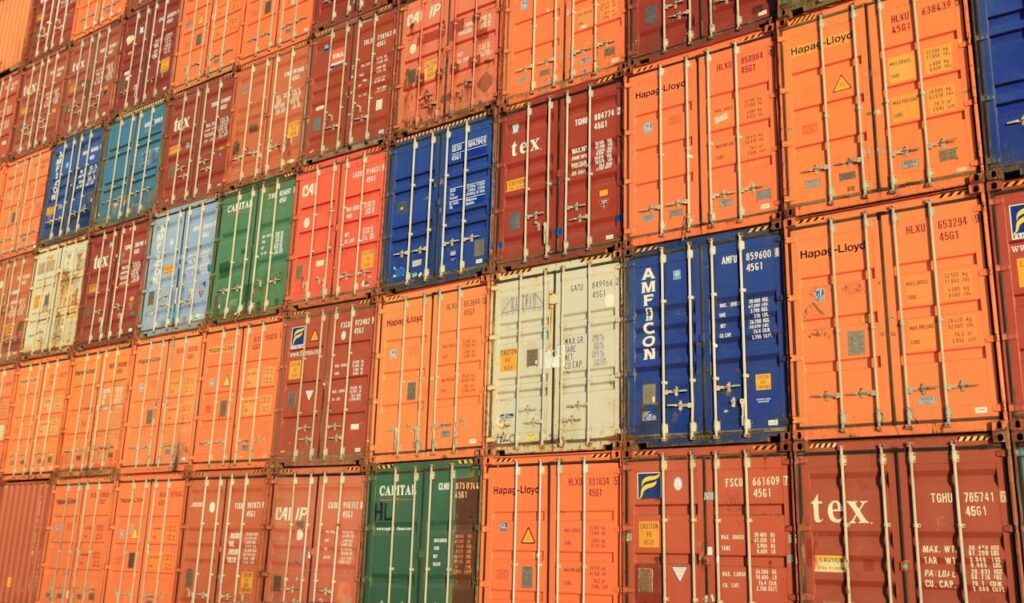
A 20 DV is a standard 20-foot Dry Van container that is used worldwide to transport dry goods by sea. The abbreviation DV stands for Dry Van, a fully enclosed container that protects cargo from weather conditions during transport. Within international supply chains, the 20 DV is one of the most commonly used container types thanks to its combination of a high payload capacity, compact dimensions, and broad applicability.
What is a 20 DV container?
A 20 DV container, also known as a 20ft Dry Van container, has a length of approximately 6.06 metres, a width of 2.44 metres, and a height of 2.59 metres. It has a capacity of approximately 33 cubic metres, and the maximum gross weight is around 30,480 kilograms, depending on the container and the shipping line.
This type of container is used for a wide variety of dry goods, including consumer goods, industrial components, machinery, packaged food products, and palletised cargo. Because the container is fully enclosed, the cargo remains well protected against rain, wind, and other external influences during both sea and road transport.
What does DV stand for?
DV stands for Dry Van. It refers to a standard shipping container designed for dry cargo that does not require temperature control. It is the most widely used container type worldwide.
In addition to the 20 DV, other container designations are also commonly used. For example, a 40 DV refers to a longer Dry Van container, a 40 HC (High Cube) offers additional internal height, and a Reefer container is used for refrigerated or temperature-sensitive goods. An Open Top container is often selected for oversized or unusually high cargo.
When do you choose a 20 DV?
A 20 DV container is particularly suitable for goods that are relatively heavy but take up little space. Thanks to its high maximum payload, this container type is frequently used for metal components, machinery, construction materials, packaged raw materials, and other compact products.
If a shipment has a relatively low weight but occupies a large volume, a 40 DV or 40 HC may be a more economical option. Choosing the right container helps prevent unnecessary transport costs and ensures that the available loading space is used as efficiently as possible.
What does this mean in practice?
In international sea freight, it is not only the dimensions of a container that matter. The weight of the cargo, the loading method, the final destination, and the logistical planning all play an important role. Choosing the wrong container can result in higher transport costs, additional handling, or less efficient use of the available space.
For this reason, logistics planners assess not only how much cargo needs to be transported, but also how it can be loaded in the safest and most efficient way. Selecting the right container contributes to a smooth and efficient supply chain, from the port of departure to the final destination.
Advantages and considerations
The popularity of the 20 DV container is mainly due to its versatility. It is available worldwide, suitable for a wide range of dry goods, and offers a high payload capacity. In addition, its enclosed construction provides excellent protection for cargo during transport.
At the same time, a 20 DV is not the right choice for every shipment. Products that require refrigeration, are exceptionally long, or have unusual dimensions require a different type of container. Proper cargo loading also remains essential to prevent damage during transport.
How can a logistics partner support you?
Although Axell Logistics does not provide sea freight services itself, it does support companies with the logistics processes surrounding international container flows. Once a container arrives, goods can be stored, managed, and distributed efficiently.
Services such as warehousing ensure efficient storage and real-time inventory management, while contract logistics helps companies organise their logistics processes in a structured way. When goods need to be transported further across Europe, international transport provides an appropriate next step within the supply chain.
By aligning storage, inventory management, and distribution effectively, selecting the right container becomes part of a well-organised and efficient logistics process.