















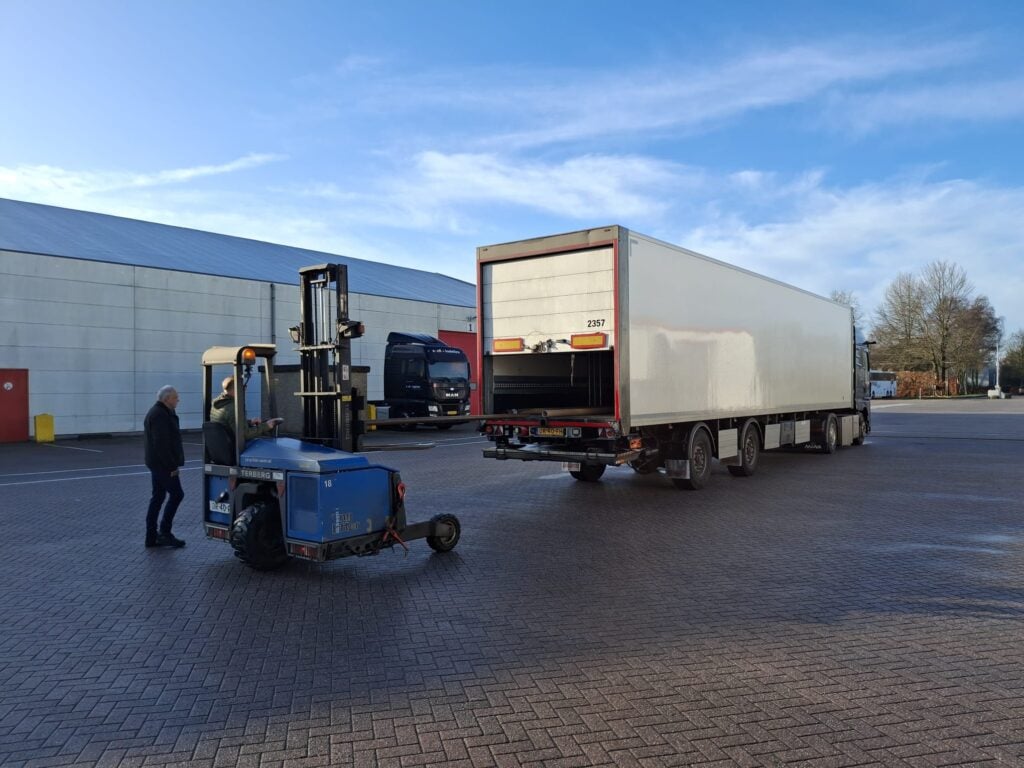
LTL transport stands for Less Than Truckload. This means that a shipment is not large enough to fill an entire truck. Therefore, multiple smaller shipments from different companies are combined within one transport.
Within distribution and international transport, LTL is widely used to utilise transport capacity more efficiently and reduce costs. Especially companies with smaller or fluctuating volumes regularly choose this form of partial transport.
What does LTL (Less Than Truckload) mean?
With LTL transport, multiple companies share the available space in one truck. Instead of reserving a full trailer, a company only pays for the part of the loading space that is actually used.
LTL is often applied for:
- smaller pallet shipments
- partial freight loads
- regular distribution shipments
- international deliveries with limited volumes
Within logistics processes, LTL is often combined with groupage transport, where different goods flows are smartly consolidated.
For companies, this provides more flexibility and lower transport costs for smaller volumes.
How does LTL transport work?
With LTL transport, goods from multiple customers are combined in one truck. Along the way, the shipments are often collected, sorted, and distributed through distribution centres or hubs.
For example, a company ships several pallets to different customers across Europe. Instead of using a full truck, these goods are combined with other shipments following the same route.
Within modern international transport processes, route planning plays an important role. By combining transport intelligently, loading efficiency improves and transport costs remain more manageable.
LTL transport is widely used within:
- retail
- ecommerce
- manufacturing
- international distribution
- supply chain networks with smaller shipments
When do companies choose LTL transport?
LTL transport becomes interesting when a shipment is too large for parcel delivery but too small for a full truck.
Many companies choose LTL when:
- transport volumes fluctuate
- cost savings are important
- flexibility is required
- multiple smaller deliveries take place
- international distribution must be organised efficiently
Especially companies that regularly transport smaller shipments benefit from more efficient use of transport capacity.
Within supply chains, LTL also helps companies respond more quickly during peak periods or changing demand.
What is the difference between LTL and FTL?
LTL and FTL are both forms of freight transport, but they differ in how freight capacity is used.
With LTL, multiple companies share one truck. With FTL (Full Truck Load), the entire truck is used for one single shipment or customer.
LTL is often suitable for:
- smaller volumes
- flexible distribution
- cost optimisation
- regular partial shipments
FTL is more often used for:
- large volumes
- direct deliveries
- time-critical transport
- full freight loads
Which solution is most suitable depends on volume, delivery time, and logistics requirements.
Advantages and points of attention of LTL transport
LTL transport offers several advantages for companies transporting smaller volumes. By sharing freight capacity, transport costs can be distributed more efficiently.
In addition, LTL provides more flexibility within distribution processes. Companies do not have to wait until a full truck is loaded and can ship smaller consignments more regularly.
Sustainability is also playing an increasingly important role. More efficient loading results in less empty loading space and better use of transport capacity.
At the same time, LTL transport requires proper planning and coordination. Because multiple shipments are combined, delivery times may sometimes be longer than with direct FTL transport. There are also more transshipment moments within distribution centres.
For companies active within distribution processes, maintaining a good balance between speed, flexibility, and costs therefore remains important.
How does a logistics partner support this?
A logistics partner supports companies in organising efficient distribution and transport flows.
This includes:
- route planning
- groupage and partial transport
- international distribution
- real-time tracking
- supply chain coordination
By combining transport flows intelligently, more flexibility and control are created within the logistics chain. Especially for companies with fluctuating volumes or international distribution, LTL transport often provides a scalable solution.
With real-time insight and efficient transport planning, companies can keep their logistics processes more manageable while simultaneously optimising transport costs.