










A customs forwarder is a specialist who supports companies with handling customs formalities related to import and export activities. The customs forwarder ensures that goods comply with applicable laws and regulations and that all required documents are correctly submitted to customs authorities.
Within international supply chains, a customs forwarder plays an important role. By organising customs processes correctly, goods can cross borders more efficiently, while delays, fines and administrative issues are minimised.
What does a customs forwarder do?
When goods cross a national border, customs declarations often need to be submitted. Depending on the country, product type and trade agreements involved, different documents and procedures may apply.
A customs forwarder supports companies with, among other things:
- Preparing and submitting customs declarations
- Checking import and export documentation
- Calculating import duties and taxes
- Communicating with customs authorities
- Advising on customs regulations
- Coordinating goods flows during cross-border transport
As a result, companies do not need to keep track of all complex customs regulations themselves and can reduce the risk of errors during the import or export process.
What does this mean in practice?
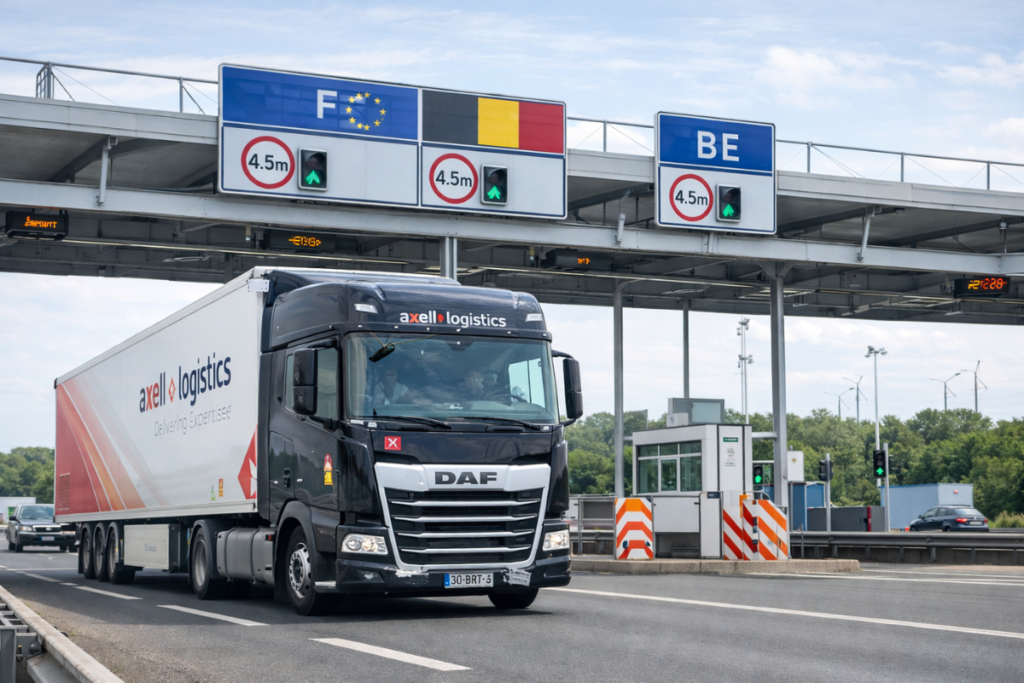
International trade involves much more than simply transporting goods. When products are imported from or exported to countries outside a customs union, additional customs formalities are often required.
A good example is trade with the United Kingdom after Brexit. Whereas goods previously moved freely within the European Union, various customs procedures now apply. Customs formalities also play an important role when trading with Switzerland, Norway or other non-EU countries.
A customs forwarder helps companies manage these processes correctly. This reduces the likelihood of delays at border crossings and allows goods to move more efficiently through international logistics networks.
How does customs forwarding work?
The customs forwarding process generally consists of several steps.
- Collecting information
The customs forwarder gathers information about the goods, their origin, destination, value and product classification. - Preparing customs documentation
Based on this information, the required customs documents and declarations are prepared. - Submitting declarations
The documents are submitted digitally to the relevant customs authorities. - Inspection and clearance
Customs authorities review the declaration. If necessary, additional inspections are carried out before the goods are released. - Continuing the logistics process
Once clearance has been granted, the goods can continue their journey to a storage location, distribution centre or final destination.
Benefits and considerations
Benefits
Reduced risk of errors
Accurate documentation lowers the risk of delays, additional costs and administrative issues.
Greater certainty regarding regulations
Customs legislation changes regularly. A specialist stays up to date with the latest requirements and procedures.
More efficient goods flows
Proper customs clearance contributes to faster movement of goods within international supply chains.
Lower administrative workload
Companies spend less time dealing with complex customs procedures and documentation.
Considerations
Accurate information is essential
A customs forwarder depends on correct information regarding products, values and destinations.
Customs forwarding is only one part of the process
Transport, warehousing and distribution must also be properly coordinated to ensure an efficient flow of goods.
What is the difference between a customs forwarder and a freight forwarder?
Although the roles sometimes overlap, there are clear differences.
A customs forwarder primarily focuses on handling customs formalities and communicating with customs authorities.
A freight forwarder mainly focuses on organising and coordinating transportation between different locations and carriers.
Within complex international supply chains, both specialisms often work together to move goods efficiently and in compliance with applicable regulations.
How can a logistics partner support this process?
Customs forwarding does not operate in isolation. Companies that are active internationally often also require support with transportation, warehousing and distribution.
An integrated logistics approach ensures that customs processes align more effectively with international transport operations and the wider supply chain. This contributes to greater visibility, reduced risks and improved control over goods flows.
For companies operating between Western and Central Europe, for example, transport to Poland may form part of an international logistics strategy in which multiple processes need to work seamlessly together.
Would you like to learn more about how logistics processes, transportation and supply chain management come together? Discover how third-party logistics supports organisations in efficiently managing their complete logistics chain.