












Sea transport is the transportation of goods by sea using cargo ships. This form of transport is used worldwide to move large quantities of goods between countries and continents. Sea transport plays an important role in international trade and is responsible for a significant share of global goods flows.
Within international supply chains, sea transport is particularly popular because of its ability to move large volumes relatively cost-effectively. Although transit times are often longer than with air freight, sea transport offers an attractive solution for companies that are not dependent on very fast deliveries.
What does sea transport mean?
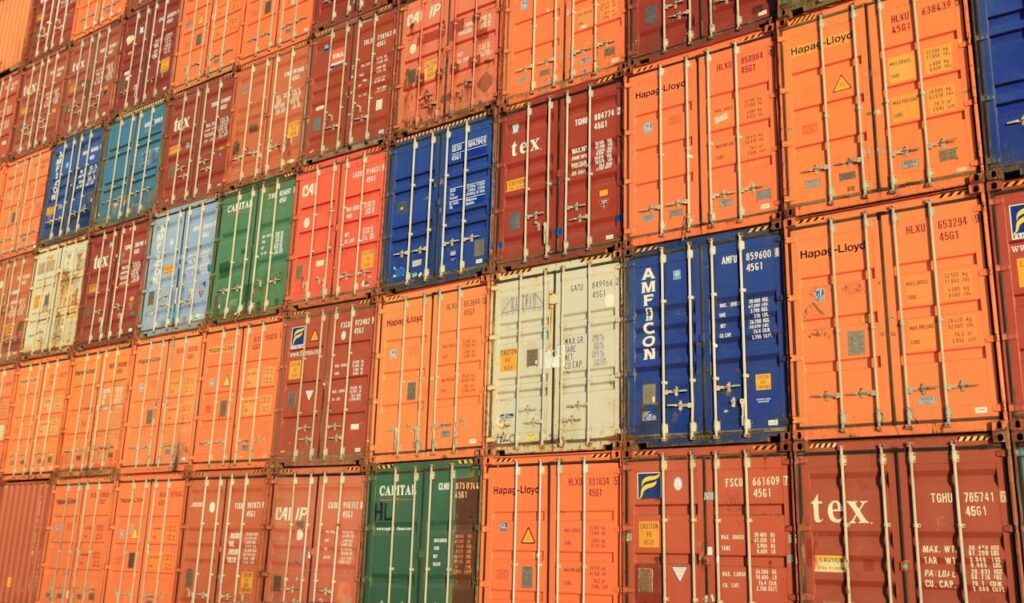
Sea transport, also known as ocean freight, involves the transportation of goods via shipping routes between ports. Goods are usually transported in containers, allowing them to be loaded, transported and transferred efficiently between different modes of transport.
This mode of transport is used for a wide range of goods, such as consumer products, raw materials, machinery, components and packaged food products.
Common activities within sea transport include:
- Loading goods into containers
- Organising international shipments
- Preparing transport documentation
- Handling customs formalities
- Coordinating transhipment between different transport modes
As a result, companies can move goods worldwide without having to organise all logistics processes themselves.
What does this mean in practice?
For many companies, sea transport forms an important link within the international supply chain. Products manufactured in Asia, for example, are often transported by ship to Europe before being further distributed to warehouses, distribution centres or end customers.
A retailer importing large quantities of products often chooses ocean freight because of the lower transportation costs per unit. Although delivery times are longer than with air transport, this can be financially attractive when demand is predictable.
Sea transport is therefore often used for goods where capacity and cost are more important than speed.
How does sea transport work?
The sea transport process generally consists of several steps.
- Preparing the shipment
The goods are packaged, labelled and prepared for transport. - Loading containers
The products are placed into containers for safe and efficient shipping. - Transport to the port
The containers are transported to the port of departure. - Sea freight transport
The cargo ship transports the goods to their destination via international shipping routes. - Unloading and further distribution
Upon arrival, the goods are unloaded and transported further to storage locations, distribution centres or final destinations.
Depending on the route, ports and customs procedures, the total lead time can vary from a few days to several weeks.
Benefits and considerations
Benefits
Cost-effective for large volumes
Sea transport often offers lower transportation costs per unit than other transport modes.
Suitable for international trade
Large quantities of goods can be transported worldwide.
High capacity
Container ships can transport enormous volumes of goods.
Widely applicable
Almost all types of standard goods can be transported via ocean freight.
Considerations
Longer transit times
Sea transport is generally slower than air freight.
Dependent on external factors
Weather conditions, port congestion and international developments can affect planning.
Good supply chain planning is essential
Due to the longer lead times, accurate inventory and transport planning is important.
How can a logistics partner support this?
Sea transport is often only one part of a larger logistics chain. After goods arrive at a port, they often need to be stored, processed and further distributed.
A professional partner for international transport helps companies align different logistics processes more effectively. This creates greater visibility into goods flows and allows transportation, storage and distribution activities to be organised more efficiently.
Warehousing also often plays an important role within international supply chains. By properly aligning storage and distribution with incoming goods flows, companies can optimise their inventory management.
Although Axell itself is not an ocean freight operator, logistics partners regularly support companies in organising broader supply chain processes in which different transport modes come together. Discover how third-party logistics helps organisations efficiently manage and optimise complete logistics chains.